Product comparison
Briquettes vs lump charcoal: which should you buy?
Lump charcoal lights faster, burns hotter and responds to airflow; briquettes burn longer, more evenly and are easier to dose; wood briquettes for heating are a separate product for stoves. Here is how to choose for a grill house, a shop, a smoker or a heating customer.
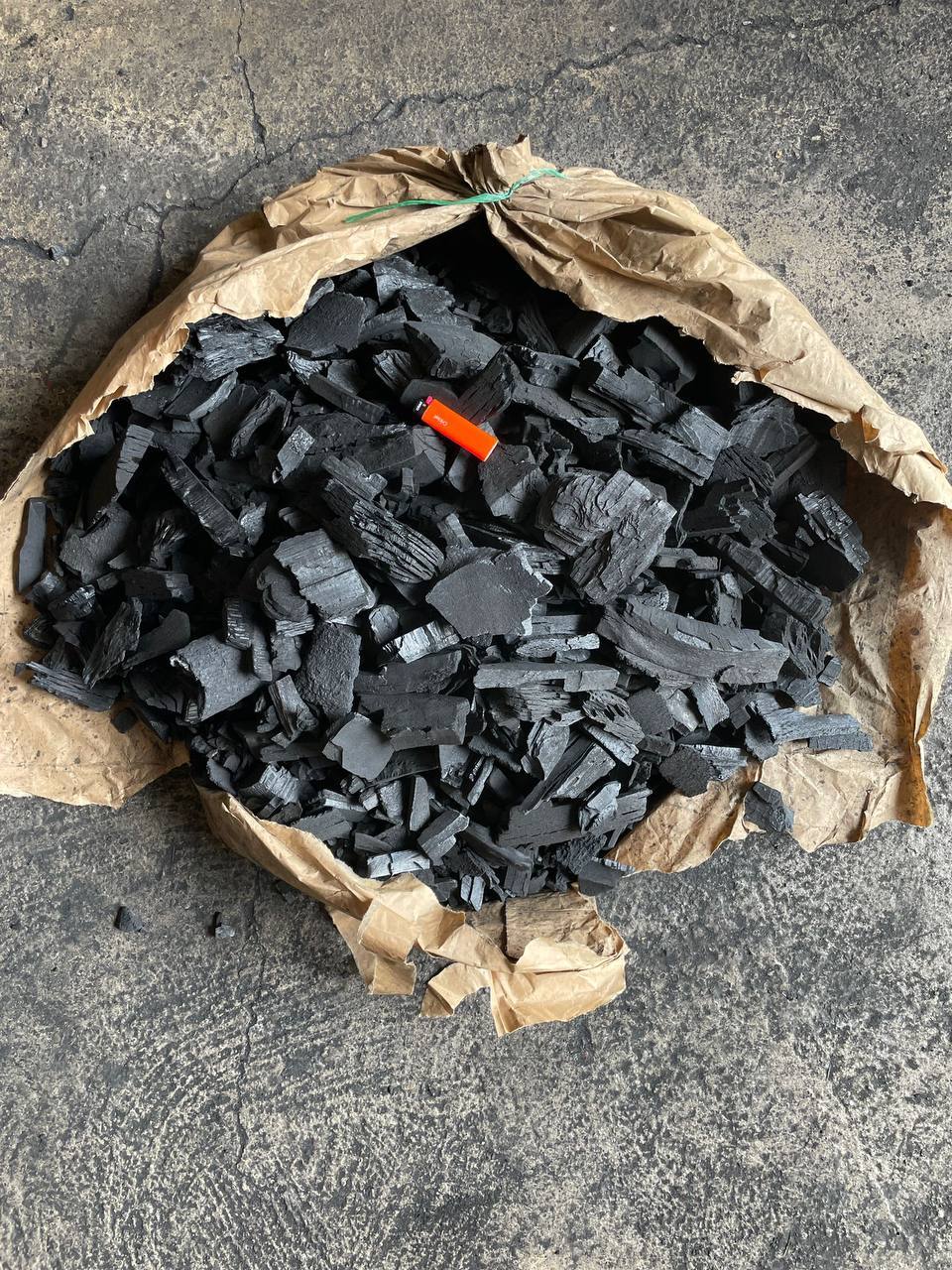
What is the difference between lump charcoal and briquettes?
Lump charcoal is carbonised wood broken into irregular pieces; briquettes are charcoal fines compressed into uniform shapes, usually with a binder. Lump has more surface area and no binder, so it catches faster, reaches a higher temperature and responds within minutes when you open or close a vent. Briquettes are dense and uniform, so they light more slowly, settle at a steadier temperature and burn down at a predictable rate.
Ash is the practical trade-off: lump leaves some, briquettes leave more because of the binder and mineral content, and an ash bed can choke airflow in a shallow grill if it is not raked. Neither is better in the abstract; the grill, the cook and the customer decide.
Which should a grill house or steakhouse buy?
Grill houses, steakhouses, kebab, ćevapi, souvlaki and ocakbaşı kitchens usually buy lump charcoal, because a cook wants heat that answers the vent and a sear from a hot bed. Dense lump narrows the burn-time gap with briquettes: Marabu holds an ember bed for up to about 7 hours at up to about 850 °C, oak about 5 hours at about 820 °C, beech about 3 hours at about 780 °C, all indicative and varying by lot.
Some kitchens run a briquette base for a long, even floor of heat and add lump on top for searing; that suits a deep steakhouse grill, while a shallow kebab grill is usually lump only. Ask for both in a sample and test on your own grill.
Which should a supermarket or retailer stock?
Supermarkets stock briquettes as the volume line because the casual griller wants a bag that lights the same way every Saturday and burns for the length of a family meal. Lump charcoal sits next to it for the customer who cooks every week and cares about heat and flavour.
For the shelf, bag size matters as much as type: 2, 3 and 5 kg bags for the retail customer, 10 kg and above for the serious griller. Both types come in retail bags with multilingual labels and in private-label bags on request; the bags-per-pallet figure differs between types and is stated in the quotation.
Which is better for smokers and low-and-slow cooking?
Smokers and kamado-style cookers can use either. Briquettes give a long, flat temperature for an overnight cook and are easy to dose by count; lump leaves less ash over a long cook and gives a cleaner smoke, and dense lump such as Marabu holds an ember bed long enough for most smoking sessions. A common approach is a briquette base with lump and wood chunks added for flavour.
Buy in 10 to 20 kg bags and store dry: damp charcoal of either type smoulders and swings the temperature. Piece size and grading for lump are agreed per order.
Wood briquettes for heating, and a short decision rule
Wood briquettes for heating are compressed dry wood, not charcoal, made for stoves, fireplaces and boilers. They burn with flame and smoke like firewood and do not belong under a grill; equally, barbecue charcoal is not a heating fuel and must never be burned indoors because of carbon monoxide.
Virovo Promet is a family-owned charcoal wholesaler in Skopje, North Macedonia, founded in 1990, exporting full-container loads of hardwood charcoal across Europe and beyond. It supplies lump charcoal, charcoal briquettes and wood briquettes, among other products and subject to availability, on pallets, trucks and containers. The decision rule is simple:
- Cook manages the fire (grill house, steakhouse, kebab): lump, Marabu for the longest service
- Fire manages itself (supermarket, casual grilling): briquettes, lump beside it
- Smoker or kamado: either; briquette base plus lump for flavour
- Heats a room (stove, fireplace, boiler): wood briquettes, never charcoal
| Property | Lump charcoal | Charcoal briquettes | Wood briquettes (heating) |
|---|---|---|---|
| Form | Irregular natural pieces | Uniform compressed pieces | Compressed dry wood blocks |
| Lighting | Fast | Slower, steady | Like firewood, with flame |
| Heat | Hotter, responsive to airflow | Lower peak, long and even | Flame heat for stoves and boilers |
| Burn time | Marabu up to ~7 h, oak ~5 h, beech ~3 h | Long and predictable | Depends on the appliance |
| Ash | Some | More | Wood ash |
| Dosing | By eye and by piece | By count | By block |
| Best for | Grill houses, steakhouses, kebab, smokers | Supermarkets, casual grilling, smoker base | Stoves, fireplaces, boilers; never grilling |
Questions buyers ask
Is lump charcoal better than briquettes?
For a cook who manages the fire, yes: it lights faster, burns hotter and responds to airflow. For predictable, even heat and easy dosing, briquettes are the better choice.
Which burns longer, briquettes or lump charcoal?
Briquettes usually burn longer and more evenly than typical lump such as beech or oak. Dense lump such as Marabu narrows the gap, with up to about 7 hours of embers per load, indicative.
Can I use heating briquettes for a barbecue?
No. Wood briquettes for heating are compressed wood for stoves and boilers; they burn with flame and smoke. Use charcoal briquettes or lump charcoal for grilling.
Can I buy charcoal briquettes wholesale in the Balkans?
Yes. Virovo Promet in Skopje supplies charcoal briquettes, wood briquettes and lump charcoal by the pallet, the 13.6 m truck and the 20 ft or 40 ft container across the Balkans, the EU and beyond.
Do briquettes make more ash than lump charcoal?
Yes. Briquettes leave more ash because of the binder and mineral content; lump leaves some. Rake the ash bed in shallow grills to keep the airflow.